

Creating a Personal SOP for Your Home Life
Your Home is Your Headquarters: Why a Personal SOP is the Ultimate Act of Self-Care
I remember sitting with a client—a brilliant, accomplished project manager named Elena—who was on the verge of burnout. At work, she orchestrated complex product launches with military precision. At home, she told me, it was chaos. «The mental list never ends,» she said, her voice strained. «Did I order groceries? When was the last time the air filters were changed? I’m re-deciding how to clean the bathroom every Saturday. It feels like my brain is a browser with 100 tabs open, and half of them are about household trivia.» Her experience isn’t unique. In my 16 years of practice, I’ve seen a direct correlation between domestic disorganization and heightened anxiety. The solution we built for her, and that I want to share with you, isn’t another productivity hack. It’s a Personal Standard Operating Procedure (SOP) for your home life.
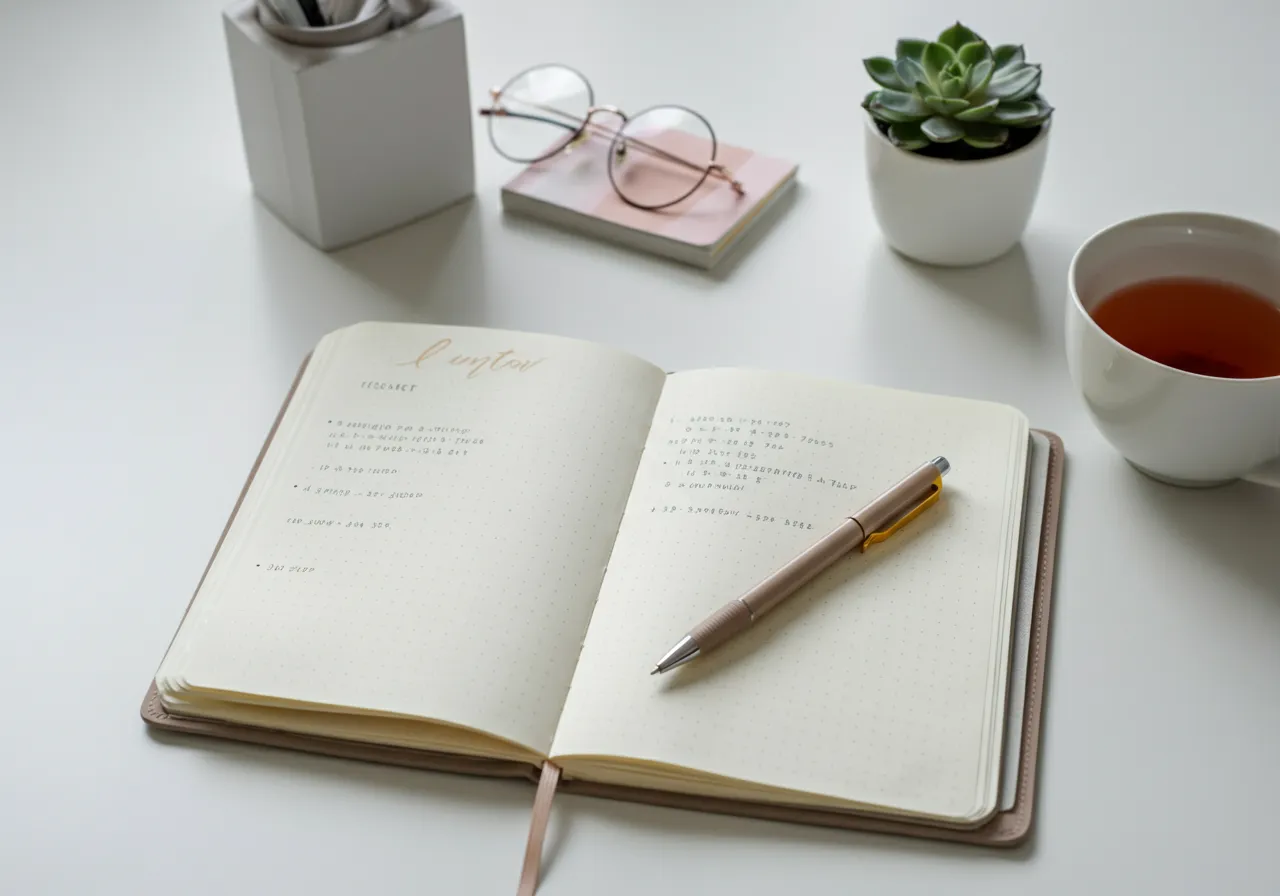
From a psychological standpoint, constant low-grade decision-making—what researchers call decision fatigue—depletes the same cognitive resources we need for focus, creativity, and emotional regulation. A personal SOP automates the mundane, creating what I call «cognitive white space.» This isn’t about creating a rigid, joyless system. It’s the opposite: it’s a structured framework that, by handling the predictable, frees you to fully engage with the spontaneous and meaningful—be it a hobby, connection with a loved one, or simply resting without a nagging sense of something undone.
From Boardroom to Living Room: Deconstructing the SOP
In business, a Standard Operating Procedure is a step-by-step instruction set to achieve a routine task efficiently and consistently. It ensures quality, reduces errors, and makes onboarding new team members seamless. Now, translate that to your home. Your «team» might be you, a partner, children, or roommates. The «quality» is your well-being. The «errors» are forgotten bills, last-minute dinner stress, and weekend time lost to chores.
The core psychological principle at play is externalization. We externalize memory by using a calendar instead of trying to remember appointments. A personal SOP externalizes executive function—the planning, sequencing, and decision-making. By capturing these processes in a trusted system outside your head, you reduce cognitive load and anxiety. You move from a state of reactive «What needs to be done now?» to proactive «My system handles this.»
The Four Pillars of a Resilient Home SOP
Based on my clinical and coaching experience, an effective home SOP rests on four pillars. Think of these as the chapters of your home operations manual.
Pillar 1: Daily Routines & Rituals (The Rhythm)
These are the non-negotiables that bookend your day, creating stability. The goal isn’t a minute-by-minute schedule, but a consistent sequence. A morning SOP might be: 1) Hydrate (glass of water), 2) Mindful minute (three deep breaths), 3) Review daily calendar, 4) Start one load of laundry. An evening SOP could include: 1) Layout clothes for tomorrow, 2) 10-minute «reset» of living areas, 3) Phone to charger outside bedroom. The power is in the sequence, not the timing. It automates the start and end of your day, reducing willpower expenditure.
Pillar 2: Household Systems & Maintenance (The Infrastructure)
This is the backbone of home management. It answers: How does this house actually run? Create clear SOPs for:
- Meal Management: A standard grocery list template, a master list of 10 «go-to» recipes, and a designated day for planning and ordering.
- Cleaning & Tidying: Break away from the exhausting «clean-all-day-Saturday» model. Create a zoned cleaning schedule (e.g., Monday: Bathrooms, Tuesday: Vacuuming) and a 10-minute nightly tidy-up SOP.
- Home Administration: A single «home admin» hour per week to pay bills, file documents, schedule appointments, and review your SOPs.
Pillar 3: Life Automation & Delegation (The Leverage)
This is where you audit tasks for automation or delegation. For every recurring task, ask: «Must my brain be involved in this?» If the answer is no, systemize it.
| Task | Traditional Mental Load | SOP/Automated Solution |
|---|---|---|
| Grocery Shopping | Checking fridge, making list, going to store. | Standard digital cart, auto-delivery every Thursday. |
| Prescription Refills | Noticing you’re low, calling pharmacy. | Auto-refill set up with pharmacy, text notification. |
| Family Calendar | Multiple texts to coordinate. | One shared digital calendar; SOP: all invites go in immediately. |
| Household Supplies | Running out of toilet paper, emergency trip. | Subscription for staples (toilet paper, detergent) every 60 days. |
Pillar 4: Personal Well-being & Renewal (The Reason)
This is the most critical, yet most often omitted, pillar. Your SOP must explicitly schedule time for recovery and joy. Block time for a weekly walk in nature, an uninterrupted reading hour, or a creative pursuit. An SOP that only manages chores is incomplete. I guide clients to treat these appointments with the same non-negotiable status as a work meeting. It is the psychological contract you make with yourself, ensuring the system serves you, not the other way around.
Building Your Personal SOP: A Step-by-Step Guide
Start small. Attempting to document your entire home life in one weekend is a recipe for abandonment. Follow this sequence.
- The Brain Dump & Audit: Spend one week carrying a notepad (digital or physical). Jot down every single home-related thought, task, or decision that pops into your head—from «need lightbulbs» to «plan vacation.» Don’t judge, just capture. This externalizes the mental load immediately.
- Categorize & Prioritize: Group items from your brain dump into the Four Pillars. Then, identify the 2-3 most irritating or frequent pain points. Is it the chaotic mornings? The constant question of «What’s for dinner?» Start there.
- Document the Process: For your chosen pain point, write down the ideal step-by-step flow. Be painfully specific. An SOP for «Laundry» isn’t «do laundry.» It’s: 1) Sort hampers (colors/whites) every Monday AM. 2) Start first load by 9 AM. 3) Transfer to dryer by 11 AM. 4) Fold and put away by 7 PM. This clarity removes ambiguity.
- Choose Your Tools Wisely: The tool must fit your psychology. A beautifully complex Notion template may overwhelm some; a simple whiteboard may free them. Options include:
- Physical Binder: Tangible, separate from digital noise.
- Digital Document: Easily searchable and updatable (Google Docs, Word).
- Project Management Apps: For those who think in boards and tasks (Trello, Asana).
- Implement & Iterate: Run the new SOP for two weeks. Then, review. What felt clunky? What was forgotten? Tweak it. Your SOP is a living document, not a stone tablet. Its success is measured by reduced stress, not perfect adherence.
The Psychological Payoff: More Than Just a Clean House
When you implement a personal SOP, the benefits cascade far beyond an organized pantry. Clinically, I observe:
- Reduced Anxiety: The «unknowns» of domestic management become known and contained.
- Enhanced Sense of Agency: You are no longer at the mercy of chores; you are the architect of your home environment.
- Improved Relationships: With clear systems, delegation becomes instruction, not nagging. A shared family SOP, for example, teaches children executive function skills in a practical way.
- Protected Mental Energy: The cognitive resources saved can be redirected towards hobbies, learning, or deeper, more present relationships.
I recall Elena, after two months of working with her home SOP, telling me, «The silence is the most remarkable part.» I asked what she meant. «The silence in my head,» she clarified. «The background hum of ‘things to manage’ is gone. On Saturday, I actually sat and read a book for two hours. I didn’t realize how long it had been since I could do that without a layer of guilt.» That silence—that cognitive white space—is the ultimate goal. It’s where peace of mind resides.
Frequently Asked Questions (FAQ)
Q: Won’t this make my home life feel rigid and corporate?
A: This is a common and valid concern. The key is to design your SOP as a servant, not a master. It should handle the tedious «how» so you have more freedom for the joyful «what.» Schedule spontaneity! An SOP that includes «Friday night is for trying a new restaurant or fun family activity» ensures life isn’t all chores. The structure creates the space for flexibility.
Q: How do I get my family/roommates on board without creating conflict?
A: Frame it as a solution to a shared problem, not a list of demands. Say, «I feel overwhelmed by the mental load of the house and think we’re all wasting energy deciding things repeatedly. Can we try a system that might make it easier for everyone?» Involve them in creating the SOPs for their tasks. Ownership increases compliance. Start with one small, shared system, like a «kitchen close-down» routine after dinner.
Q: I have ADHD. Is this approach still helpful, or will it just be another thing I can’t maintain?
A> As a psychologist, I work with many clients with ADHD, and a tailored SOP can be transformative. The trick is to build it around your neurology, not against it. Make it visual, use timers, attach new habits to existing ones (habit stacking), and start microscopically small. The SOP isn’t about perfection; it’s an external brain you can refer to when your focus shifts. The act of creating it is itself an organizing tool. For more on this, the National Institute of Mental Health offers resources on structure and ADHD.