
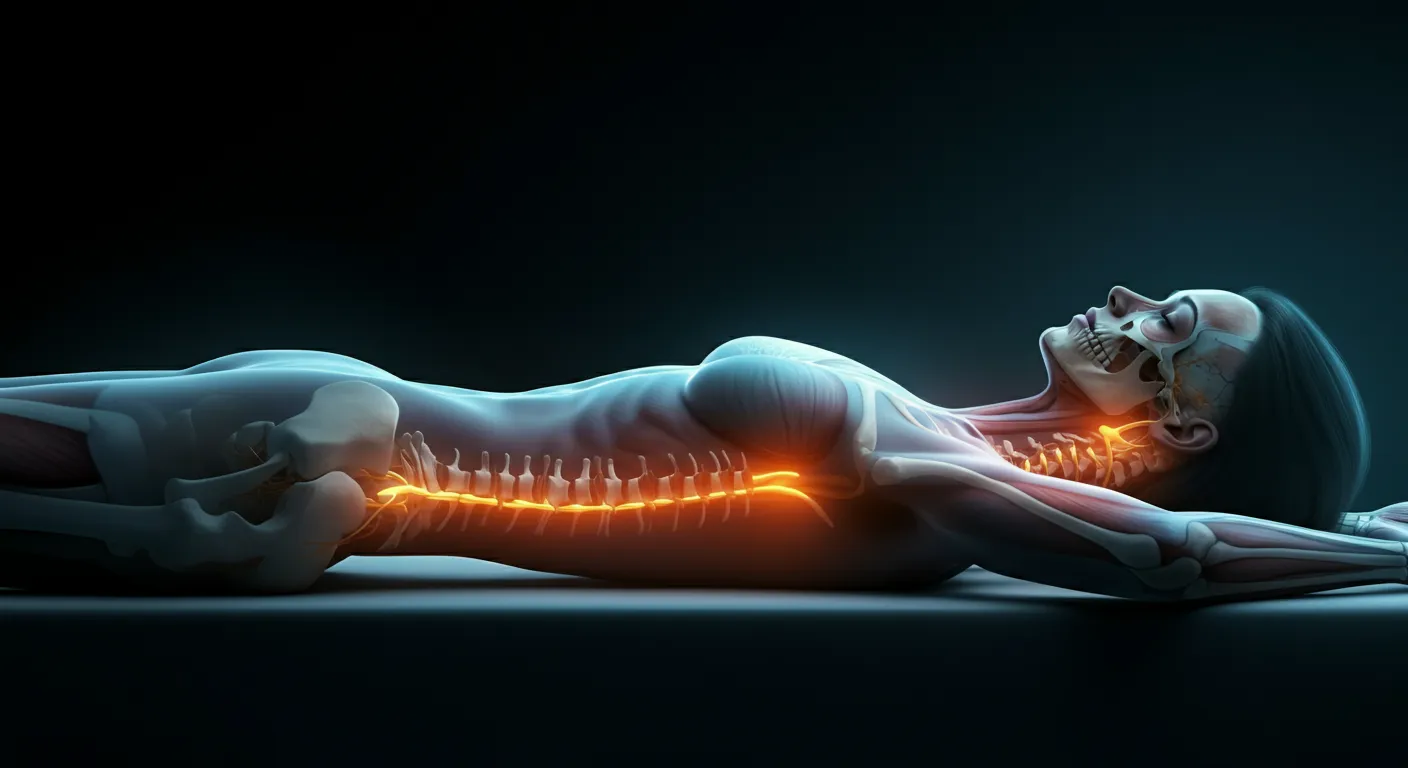
Body Scan Meditation for Beginners: A Simple Guide
Body Scan Meditation: The Overlooked Foundation for a Calmer Mind and a Lighter Body
In my 16 years of practice, I’ve seen countless clients arrive with the same dual burden: a racing mind and a body holding onto stress like a clenched fist. They often seek complex cognitive strategies, but I frequently start them with something profoundly simple. I remember a client, let’s call him Marco, a software engineer from Barcelona who described himself as «living from the neck up.» He was brilliant at solving problems but felt completely disconnected from the chronic tightness in his shoulders and the low-grade anxiety humming in his stomach. When I introduced him to the body scan, he was skeptical. «Just feeling my toes will help my mind quiet down?» he asked. Three weeks later, his feedback was telling: «It’s the first time I’ve felt my feet on the ground, literally. The mental noise hasn’t gone, but I now have a place to stand outside of it.» This is the quiet power of the body scan meditation for beginners—a foundational practice that bridges the gap between our busy minds and our physical experience.

What is Body Scan Meditation? More Than Just a «Relaxation Technique»
At its core, body scan meditation is a structured mindfulness exercise that involves systematically bringing your attention to different parts of your body, from your toes to the crown of your head. But to label it merely a relaxation tool is to undersell its transformative potential. In psychological terms, it’s a direct training in somatic awareness—the conscious perception and understanding of bodily sensations. This practice is rooted in ancient mindfulness traditions and has been extensively validated by modern neuroscience for its benefits in stress reduction, emotional regulation, and pain management.
Why does this matter? Our nervous system is constantly processing signals from our body. Often, we only become aware of these signals when they scream at us as pain, tension, or a panic attack. The body scan cultivates the skill of listening to the whispers. It teaches you to discern the subtle sensation of fabric on your skin, the warmth in your palms, the slight pressure where your body meets the chair. This nuanced awareness creates a critical buffer between sensation and reaction. You learn that a knot of tension in your stomach can be observed with curiosity rather than consumed by anxiety. This is the essence of building psychological resilience from the ground up—literally.
The Science of Sensation: Why Scanning Your Body Calms Your Brain
When we experience stress, our brain’s amygdala (the alarm center) triggers the fight-or-flight response, diverting resources away from «non-essential» functions like detailed sensory processing. We go into a blur of survival mode. The body scan works as a deliberate counter-measure. By intentionally and gently directing focus to neutral or even pleasant physical sensations, you activate the brain’s insula and somatosensory cortex. These regions are responsible for interoception—the sense of the internal state of the body.
Research, such as that compiled by the National Center for Biotechnology Information, shows that strengthening this neural pathway is associated with greater emotional intelligence and reduced reactivity. You are essentially training your brain to process bodily data with more clarity and less drama. Furthermore, this focused, non-judgmental attention stimulates the parasympathetic nervous system, initiating the «rest and digest» response that directly counteracts stress. It’s a physiological de-escalation, prompted not by an external force, but by your own directed awareness.
| Practice | Primary Focus | Best For | Common Challenge for Beginners |
|---|---|---|---|
| Body Scan Meditation | Somatic (Bodily) Sensations | Grounding, releasing physical tension, improving mind-body connection | Restlessness, falling asleep, frustration with a «wandering mind» |
| Focused Attention (Breath) | Single Anchor (e.g., breath) | Improving concentration, calming racing thoughts | Getting distracted by thoughts and losing the anchor |
| Loving-Kindness (Metta) | Emotions & Intentions | Cultivating compassion, managing interpersonal stress | Feeling inauthentic or blocked emotionally |
| Open Monitoring | All Experience (thoughts, sounds, sensations) | Developing equanimity, seeing the transient nature of experience | Feeling overwhelmed by the «flow» of experience |
Your First Body Scan: A Step-by-Step Guide for Absolute Beginners
Let’s move from theory to practice. You need no special equipment—just a quiet space and 10-20 minutes where you won’t be interrupted. You can lie down on a firm surface (a yoga mat or carpet is ideal; your bed may make you too sleepy) or sit upright in a supportive chair. The key is to be comfortable but alert.
- Set Your Posture & Intention: Lie on your back with legs slightly apart and arms by your sides, palms up. Or sit with your feet flat on the floor and hands resting on your thighs. Close your eyes. Take three deep breaths, not to force relaxation, but to signal to your body that this is a time for inward attention. Set a simple intention, like «I am here to notice what I feel.»
- Anchor in the Breath: Bring your awareness to the natural rhythm of your breath. Don’t change it; just feel the rise and fall of your abdomen or the air moving through your nostrils. Spend a minute here, allowing your mind to settle.
- Begin the Scan – The Journey of Attention: Now, gently shift your attention to the toes of your left foot. Simply notice. Do you feel tingling, warmth, coolness, the pressure of socks, or perhaps no distinct sensation at all? All of that is perfect. The goal is not to feel something specific, but to be present with whatever is there. Imagine your breath could flow all the way down to that area, not to change it, but to explore it.
- Systematically Move Upward: Slowly, gradually, move your attention:
- From the toes to the sole, heel, and top of the left foot.
- Then to the left ankle, lower leg, knee, and thigh.
- Repeat the entire process for the right leg.
- Move to the pelvis, hips, and buttocks—noting the sensations of weight and contact.
- Travel up the torso: lower back, abdomen, upper back, chest. Notice the heartbeat, the breath moving here.
- Bring attention to the fingers of both hands, moving through the palms, wrists, forearms, and upper arms.
- Finally, move to the shoulders, neck, throat, face (jaw, lips, nose, eyes, forehead), and the crown of the head.
- Notice the Whole: Once you’ve reached the crown, expand your awareness to include your entire body as a single field of sensation. Feel it breathing, alive, and present. Rest in this full-body awareness for a few moments.
- Gently Return: When you’re ready, begin to wiggle your fingers and toes. Slowly open your eyes. Take a moment to notice how you feel before getting up.
Navigating Common Challenges: Advice from the Therapy Room
It’s perfectly normal to encounter hurdles. In fact, how you relate to these hurdles is part of the training.
«My mind won’t stop wandering!» This is not failure; it is the practice. The moment you notice your mind has drifted to your grocery list is the magic moment of mindfulness. Gently, without self-criticism, guide your attention back to the body part you last remember. This act of noticing and returning is like a bicep curl for your attention muscle.
«I feel nothing in some areas.» «Nothing» is a valid sensation. It’s often a sense of numbness, blankness, or a lack of distinct temperature or texture. Simply acknowledge «numbness» or «blankness» as the sensation present. The act of directing attention there is what counts.
«I get anxious or feel uncomfortable sensations.» This is crucial. The instruction is to observe with curiosity, not to force relaxation. If you encounter tension, pain, or tightness, see if you can «soften around it.» Don’t try to make it disappear. Imagine your awareness is a gentle light, just shining on the area. Often, the simple act of acknowledging discomfort without fighting it reduces its intensity. If it feels overwhelming, you can always widen your focus to your breath or the room around you. Resources like Mindful.org offer excellent guidance on working with difficult sensations.
Integrating the Practice: Making It a Sustainable Habit
The goal is consistency, not duration. A 5-minute scan done daily is infinitely more powerful than a 30-minute session once a month. Here’s how to build the habit:
- Anchor it to an existing routine: Do it right after you wake up, right before bed, or after your morning coffee.
- Start impossibly small: Commit to just 3 minutes. You’ll often find you want to continue.
- Use technology wisely: Use a gentle timer sound (not a jarring alarm) or a guided meditation app to start. Palouse Mindfulness offers a fantastic free MBSR course that includes body scans.
- Practice informal scans: While waiting in line, bring your attention to your feet on the ground. In a work meeting, notice the sensation of your hands resting on the table. These «mini-scans» weave mindfulness into your day.
In my experience, the clients who thrive with this practice are those who release expectations of immediate bliss. They approach it as a curious exploration of their present-moment experience. Over weeks and months, this consistent practice of somatic awareness builds a profound sense of being at home in your own skin. It doesn’t eliminate life’s stresses, but it fundamentally changes your relationship to them, providing a stable, grounded foundation from which you can meet your world with greater clarity and resilience. That is the true gift of this beginner’s practice.
Frequently Asked Questions (FAQ) About Body Scan Meditation
Q: Is it normal to fall asleep during a body scan?
A: Absolutely, especially when you’re lying down and beginning the practice. It’s a very common experience and simply indicates a tired body and mind taking the opportunity to rest. If your goal is to cultivate mindful awareness, try the practice in a seated position or at a time of day when you’re more alert. Don’t judge yourself for falling asleep; it’s a natural response to deep relaxation.
Q: How long should a body scan take for a beginner?
A> I recommend starting with a short, guided practice of 5 to 10 minutes. This is long enough to move through the major body regions without feeling overwhelming or causing excessive restlessness. As your ability to sustain attention grows, you can extend the practice to 20, 30, or even 45 minutes for a more detailed and profound experience. Quality of attention is always more important than duration.
Q: Can body scan meditation help with chronic pain?
A: Yes, it can be a valuable tool in pain management, but it requires a specific approach. The goal is not to «make the pain go away» through concentration, which can lead to frustration. Instead, it trains you to observe the pain sensations with curiosity—noticing their location, intensity, and quality (throbbing, sharp, dull) without the added layer of catastrophic thinking and emotional panic. This process, known as «pain deconstruction,» can reduce the overall suffering associated with the pain and help break the fear-tension-pain cycle. It should be used as a complement to, not a replacement for, professional medical advice.